gotucream-logo-transparent-2x

FREE & Fast Shipping + 180 Day Money Back Guarantee

FREE & Fast Shipping + 180 Day Money Back Guarantee

Gotucream™Made in Scotland

Arm Dark Spot Cream – Gotucream 2 fl oz

★★★★★5 stars · 2,309 reviews on Trustpilot
Worked great and cleared up the skin discoloration!!!!— Leslea, Tennessee · Verified buyer
Choose your jar size

Used daily on a palm-sized area, a 2 fl oz jar lasts about four weeks. The 10 fl oz jar holds five times as much.

Free shipping · arrives in 2–3 days

Our Guarantee

Here's our simple promise to you: if your dark spots do not look better within three days of your first application, you get every cent back. No questions and no hassle. You have 180 days to decide, and returns are free: we email you a prepaid return label.

Got Dark Spots on Your Arms? Do Not Worry!

Dark spots on the arms
Gotucream is here to help!

Unlike ordinary dark spots products, you won't have to wait for many days or weeks before seeing your first results. With Gotucream you will see the look of your dark spots on the arms remarkably improve within just three days. Gotucream is the result of extensive research with 217 published scientific studies on its botanical ingredients. In addition results are backed by our incredible 100% no questions asked 180 days money back guarantee.

Take control of your skin naturally.

Join 250,000+ Americans taking control of their skin naturally.

★★★★★5 stars from 2,309 Trustpilot reviews
Gotucream customer with GotucreamGotucream customer with GotucreamGotucream customer with GotucreamGotucream customer with GotucreamGotucream customer with GotucreamGotucream customer with GotucreamGotucream customer with GotucreamGotucream customer with GotucreamGotucream customer with GotucreamGotucream customer with GotucreamGotucream customer with Gotucream
Why Gotucream

10 Things That Make Gotucream The Best Arm Dark Spot Cream

Here are 10 reasons Gotucream is the number one choice for dark spots all over the world:

Fast Results

Ordinary dark spots products make you wait weeks. Gotucream gets to work from the very first application: your dark spots look remarkably better within 3 days, and you have your complete results within 3 weeks.

Natural Ingredients

Six botanicals, chosen from thousands of years of traditional herbal medicine and made in Scotland. 100% natural, nothing harsh.

Backed By Science

Every ingredient earns its place twice: centuries of traditional use, and modern research. Together, the six botanicals are backed by 217 published scientific studies.

Clean Formula

The active botanicals are hand blended into a natural cream base with no parabens and no harsh chemicals. Nothing in the jar you wouldn't want on your skin.

Our Own Recipe

Six botanicals blended to our own proprietary formula, for maximum effect on the look of your dark spots.

Gentle On Skin

A gentle botanical formula. Compare that with the chemical-heavy creams on the shelf.

Feels & Smells Great

Non-greasy, sinks in fast, and smells so good you'll look forward to using it.

For All Severities of Dark Spots

Whether your dark spots showed up last month or have been there for years, Gotucream is the strongest cosmetic cream.

Suitable For Everyone

Every skin type, every skin tone, every age. If you have skin, Gotucream is for you.

180 Day Money Back Guaranteed

Try it for 180 days. Not happy for any reason? Claim a refund with no questions asked. Your purchase is 100% risk free.

Buy Now With 180 Days Guarantee

YOUR GOTUCREAM JOURNEY

Your Arm Spot Timeline

Initial results in 3 days. Complete transformation by week 3.
Close-up showing arm dark spots
Day 3

Softer to the touch

Skin on your arms feels smoother and more supple.

Week 1

The change begins

You'll see dark spots on your arms start to look lighter.

Week 2

Visibly lighter

The look of dark spots on your arms keeps improving.

Week 3

Short sleeves again

Bare arms with confidence.

What You’ll See In The End

Guaranteed Results. No Excuses

01

Fades Arm Spots

Dark spots look lighter.

02

Evens Arm Tone

Patchy areas blend together.

03

Softens Sun Spots

Sun-related marks look softer.

04

Smooths Texture

Arms feel soft.

05

Short Sleeves Again

Bare arms with confidence.

06

Clear in Photos

Even arms in daylight.

DON’T TAKE OUR WORD FOR IT!

Rated 5 Stars on Trustpilot

★★★★★
Unbelievable! It truly works like described- within 2 days my skin appearance totally changed.— Tina S., Florida · Verified buyer
★★★★★
Fabulous beyond belief!! This Worked!!!— Marla Z. · Verified buyer
★★★★★
This cream is awesome! I noticed a difference within 3 days of using this product. I will be ordering again soon.— Cynthia B., South Carolina · Verified buyer
★★★★★
I have tried everything, GotuCream is the winner!— Jacqueline B. · Verified buyer
★★★★★
This cream works. Saw great results the next morning. Highly recommend this cream!— Pam, California · Verified buyer
★★★★★
Performed far better than I could have believed! Thanks for an amazing product!— Vickie S., Texas · Verified buyer
★★★★★
Seriously amazed at the change in my skin after just a few days.— Heidi W., Minnesota · Verified buyer
★★★★★
Worked in 1 and a half days. Perfect.— Julie S., North Carolina · Verified buyer
★★★★★
LOVE this product! I have already bought it 3 times— Shelby, California · Verified buyer
★★★★★
Can't believe that it really works. Would recommend and buy again.— Dvorah · Verified buyer
ZBXjqPZYFZUSNneE-11.jpg
THE SCIENCE OF GOTUCREAM

Botanical Science, Clinically Studied

Out of thousands of plants studied in skin research, six stood out, led by Gotu Kola, whose asiaticoside and madecassoside are among the most studied botanical compounds in skincare. All six are in every jar of Gotucream, blended using our own secret recipe for maximum effect, and together they are backed by an astonishing 217 published scientific studies.
1 recipe proprietary, ours alone
3 days to first results
1 jar no 7-step routine
WHAT IS INSIDE

Six Botanicals. One Powerful Secret Recipe.

Gotucream is a unique combination of six botanicals blended together in a specific proprietary proportion according to our unique formula for maximum effect on dark spots on your arms.
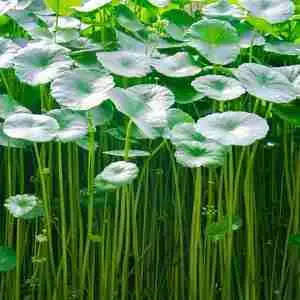
Gotu Kola botanical

Gotu Kola

Rich in asiaticoside and madecassoside, triterpenoids among the most studied plant compounds in skin research, and the centella asiatica behind the “cica” boom in Korean skincare.

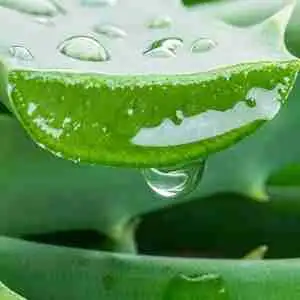
Aloe Vera botanical

Aloe Vera

Carries aloesin and acemannan, compounds studied in published research for an even-looking tone and a smooth, comfortable surface.

Tea Tree botanical

Tea Tree

Its key compound, terpinen-4-ol, is one of the most researched botanical actives for a clear, fresh-looking skin surface.

Neem botanical

Neem

Packed with limonoids and essential fatty acids that help skin look healthy, resilient and well cared for.

Cedarwood botanical

Cedarwood

Its sesquiterpenes, including cedrol, give the blend its grounding character and a balanced, comfortable feel on the skin.

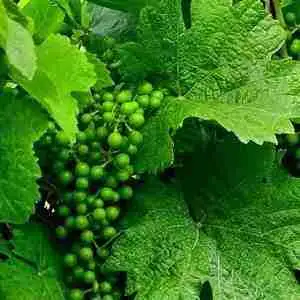
Grapeseed botanical

Grapeseed

Pressed from winemaking seeds and rich in linoleic acid, a building block of the skin barrier, and proanthocyanidins, among the most potent botanical antioxidants studied.

The Science Inside

How Gotucream Works On Dark Spots

The look of dark spots is not a surface stain. It starts deep in the epidermis where pigment is made, is switched on by sunlight and stress, and lingers in surface cells that are slow to shed. Our unique proprietary formula is built to work on all three stages at once.
3Stratum corneumold cells slow to shedPigment clusterthe visible spot1Melanocytespigment made hereDermisSubcutaneous fat2UV & free radicals switch pigment onFig. 1 Cross-section through a dark spot. Pigment is① made in melanocytes, ② switched on by sunlight andoxidative stress, ③ held in surface cells slow to shed.
1

Pigment

Melanogenesis
TyrosineDOPADopaquinoneMelanintyrosinasetyrosinaseAloesinstudied on this stepMelanocyteKeratinocytesFig. 2 Melanogenesis: melanin is made in melanocytes,then passed up into the skin cells above.

Deep in the epidermis, melanocytes convert the amino acid tyrosine into melanin through the enzyme tyrosinase, then pass melanin-filled melanosomes up into the surrounding skin cells. Where this runs high, or clusters in one place, skin reads darker. Our formula carries aloesin and grape-seed proanthocyanidins, compounds studied in published research for their effect on tyrosinase activity and on oxidative stress respectively, so the look of dark spots fades toward an even tone.

Aloesin · Proanthocyanidins
2

Triggers

Oxidative stress
Free radicalMelanocytessignal for more pigmentMMP enzymesbreak down collagenProanthocyanidinsantioxidants studied hereFig. 3 Oxidative stress: free radicals from sunlight and stressswitch on pigment and the enzymes that degrade collagen.

Sunlight and everyday stress generate free radicals, unstable molecules that set off a chain reaction inside skin cells. They signal melanocytes to make more pigment and switch on enzymes called matrix metalloproteinases, which break down collagen. Grape-seed proanthocyanidins are among the most potent antioxidants studied in botanical research, and Gotu Kola's triterpenoids have been studied for antioxidant activity too, helping protect the look of dark spots from being deepened day after day.

Proanthocyanidins · Triterpenoids
3

Renewal

Desquamation
Shed from surfaceNew cells form in the basal layerFig. 4 Renewal: skin cells rise, flatten and are shed. Whenshedding slows, old cells build up on the surface.

Skin renews from the bottom up: new cells form in the basal layer, rise, flatten and are finally shed from the surface. When shedding slows, old cells pile up, holding pigment and dryness at the surface, and skin looks darker, duller and rougher. Our formula pairs aloe's polysaccharides with grapeseed's linoleic acid, both studied for their role in a healthy outer layer, so built-up cells give way and fresher-looking skin shows through.

Polysaccharides · Linoleic acid

Three mechanisms, one jar. That is the science behind our unique proprietary formula.

Compound research refers to published studies on these botanical compounds, not on Gotucream itself.
JOIN THE CHANGE.

Redefining skincare

Support the movement for natural products by only buying products that:

01

Have a long history of traditional use.

02

Use botanical ingredients.

03

Use only relevant ingredients.

04

Are responsibly made.

05

Are validated by real scientific research.

Gotucream is gently blended by hand in Scotland, United Kingdom, using the finest botanical ingredients.

Buy Gotucream today and see the difference in your dark spots on the arms for yourself!

WHY US.

5 Facts About the Making of Gotucream

Five things we do that commercial creams don’t. Each one is why Gotucream is different.
01

Protecting the botanicals

Glycerin extraction, not alcohol. Alcohol gives a longer shelf life at the cost of the plant’s delicate compounds.

02

Using the right part

Leaf extract where only the leaf will do. Whole-plant extracts are cheaper, and weaker.

03

A naturally derived base

No synthetic fillers. The six botanicals sit in a naturally derived base, not a chemical one that cuts costs.

04

Slowly hand blended

No machines. Hand blending keeps the structure of each botanical intact, batch by batch.

05

Measured with purpose

No guesswork. Each botanical goes in at a high, meaningful concentration.

✓

180 Day Money Back Guarantee

We make your purchase risk free! If for any reason you are not satisfied, fill in our refund form. It takes less than 30 seconds, and we credit your money back to the card you paid with, no questions asked, even if your jar is empty. Returns cost you nothing: we email you a free prepaid return label. Your purchase is 100% risk free!

Clear Arms, All Summer

Most customers feel the difference within 3 days. Pick your jar and start tonight; if you don’t feel it, it’s free.

ASK US ANYTHING

Questions, answered.

How fast will I see results?

Gotucream is designed as a fast-acting cream that goes to work the moment you apply it. You should see your dark spots looking noticeably better within 3 days of your first application, with the complete transformation by week 3. If you don't, return your jar, even if it's empty, for a full refund. Returns are free: we email you a prepaid return label.

Can I use it on my hands too?

Yes. Use it on arms, hands and shoulders, wherever spots show.

How do I use it?

Massage over the arms on clean, dry skin. Use daily, following the directions on the jar.

Does it suit all skin types?

Yes. Gotucream is made for every skin type, tone and age. It is for external use; if your skin is sensitive, do a patch test before first use.

What does it feel and smell like?

Rich but not greasy: it sinks in and gets on with its work. The scent is herbal, from the cedarwood and tea tree in the blend.

How long does a jar last?

Used daily on a palm-sized area, a 2 fl oz jar lasts about four weeks. Smaller areas go much further, and the 10 fl oz jar holds five times as much.

Contact Us

We'd Love to Hear From You

For a fast response, fill out the form below and we will get back to you promptly.
Contact Form Demo

Get in touch

Tel: 323-310-1712
Email: support@gotucream.com

Hours

Mon–Fri, 9:00 AM – 5:00 PM

USA customer service address

1968 S. Coast Hwy #4344
Laguna Beach, CA 92651

Manufacturer

Herbal Dermals Ltd
12 Cook St, Glasgow G5 8JN
Scotland, United Kingdom

THE BOTANICAL RESEARCH

The science behind Gotucream.

Following is a non-exhaustive list of published research on the ingredients used in Gotucream. The research is cited here as a reference only and is not meant to constitute a substitute for professional medical advice.

  1. Coldren CD, Hashim P, Ali JM, Oh SK, Sinskey AJ, Rha C. Planta Med 2003, 69:725-32
  2. Distante F, Scalise F, Ronaz C, Bonfigli A, Fluhry JW, Berardesca E. International Journal of Cosmetic Science 2002, 24:81-7
  3. Haftek M, Mac Mary S, Bitoux MA, Creidi P, Seite S, Rougier A et al. Exp Dermatol 2008, 17:946-52
  4. Lee J, Jung E, Kim Y, Park J, Park J, Hong S, Kim J, Hyun C, Kim YS, Park D. Planta Med 2006, 72:324-8
  5. Ryu JS, Park SG, Kwak TJ, Chang MY, Park ME, Choi KH, Sung KH, Shin HJ, Lee CK, Kang YS, Yoon MS, Rang MJ, Kim SJ. Skin Res Technol 2005, 11:157-64
  6. Ahshawat MS, Saraf S. Int J Cosmet Sci 2008, 30:183-93
  7. Maquart FX, Bellon G, Giller P, Randoux A, Borel JP. Sem Hop Paris 1989, 65:1571-4
  8. Abdul Hamid A, Shah ZM, Muse R, Mohamed S. Urban Food Chem 2002, 77:465-9
  9. Gnanapragasam A, Ebenezar KK, Sathish V, Govindaraju P, Devaki T. Life Sci 2004, 76:585-97
  10. Jayashree G, Kurup Muraleedhara G, Sudarslal S, Jacob VB. Fitoterapia 2003, 74:431-4
  11. Subathra M, Shila S, Devi MA, Panneerselvam C. Exp Gerontol 2005, 40:707-15
  12. Zainol MK, Abd-Hamid A, Yusof S, Muse R. Urban. Food Chemistry 2003, 81:575-81
  13. Kimura Y, Sumiyoshi M, Samukawa K, Satake N, Sakanaka M. Eur J Pharmacol 2008, 584:415-23
  14. Liu M, Dai Y, Li Y, Luo Y, Huang F, Gong Z, Meng Q. Planta Med 2008, 74:809-15
  15. Mallol J, Belda MA, Costa D, Noval A, Sola M. Int J Cosm Sci 1991, 13:51-7
  16. Shukla A, Rasik AM, Jain GK, Shankar R, Kulshrestha DK, Dhawan BN. J Ethnopharmacol 1999, 65:1-11
  17. Suguna L, Sivakumar P, Chandrakasan G. Indian J Exp Biol 1996, 34:1208-11
  18. Wolfram S. Wien Med Wochenschr 1965, 115: 439-42
  19. Lu L. et al. (2004). Int J Dermatol. 801-7.
  20. Chen YJ, Dai YS, Chen BF, Chang A, Chen HC, Lin YC et al. Biol Pharm Bull 1999, 22:703-6
  21. Klövekorn W, Tepe A, Danesch U. Int J Clin Pharmacol Ther 2007, 45(11):583-91.
  22. Somchit MN, Sulaiman MR, Zuraini A, Samsuddin L, Sonchit N, Israf DA, Moin S. Indian J Pharmacol 2004, 6:377-80
  23. Natarajan S, Paily PP. Ind J Dermatol 1973, 18(4):82-5
  24. Sampson JH, Raman A, Karlsen G, et al. Phytomedicine. 2001;8:230–5
  25. De Sanctis MT, Belcaro G, Incandela L, Cesarone MR, Griffin M, Ippolito E, Cacchio M. Angiology 2001, 52(2):55-9
  26. Guseva G, Stravoitova MN, Mach ES. Ter Arkh. 1998;70:58–61.
  27. Allegra C, Pollari G, Criscuolo A, Bonifacio M, Tabassi D. Clin Ter 1981, 99(5):507-13 [Italian]
  28. Arpaia MR, Ferrone R, Amitrano M, Nappo C, Leonardo G, del Guercio R. Int J Clin Pharmacol Res 1990, 10:229-33
  29. Belcaro GV, Grimaldi R, Guidi G. Angiology 1990, 41(7):533-40
  30. Cataldi A, Gasbarro V, Viaggi R, Soverini R, Gresta E, Mascoli F. Minerva Cardioangiol 2001, 49(2):159-63 [Italian]
  31. Cesarone MR, Belcaro G, De Sanctis MT, Incandela L, Cacchio M, Bavera P, Ippolito E, Bucci M, Griffin M, Geroulakos G, Dugall M, Buccella S, Kleyweght S, Cacchio M. Angiology 2001, 52(2):15-18
  32. Cesarone MR, Belcaro G, Rulo A, Griffin M, Ricci A, Ippolito E, De Sanctis MT, Incandela L, Bavera P, Cacchio M, Bucci M. Angiology 2001, 52(2):45-8
  33. Cesarone MR, Laurora G, De Sanctis MT, Incandela L, Grimaldi R, Marelli C, Belcaro G. Minerva Cardioangiol 1994, 42(6):299-304 [Italian]
  34. Incandela L, Cesarone MR, Cacchio M, De Sanctis MT, Santavenere C, D’Auro MG, Bucci M, Belcaro G. Angiology 2001a, 52(2):9-13
  35. Incandela L, Belcaro G, De Sanctis MT, Cesarone MR, Griffin M, Ippolito E, Bucci M, Cacchio M. Angiology 2001b, 52(2):61-7
  36. Incandela L, Belcaro G, Nicolaides AN, Cesarone MR, De Sanctis MT, Corsi M, Bavera P, Ippolito E, Griffin M, Geroulakos G, Sabetai M, Ramaswami G, Veller M. Angiology 2001c, 52(2):69-73
  37. Marastoni F, Baldo A, Redaelli G, Ghiringhelli L. Minerva Cardioangiol 1982, 30(4):201-7 [Italian]
  38. Martinez MJ, Bonfill X, Moreno RM, Vargas E, Capellà D. Cochrane Database Syst Rev 2005, 20(3):CD003229
  39. Pointel JP, Boccalon H, Cloarec M, Ledevehat C, Joubert M. Angiology 1987, 38(1):46-50
  40. Wollina U, Abdel-Naser MB, Mani R. 2006, 5:169-80
  41. Alternative Medicine Review. 2007. 12:1, 69-72.
  42. Asakawa Y, Matsuda R, Takemoto T. Phytochemistry 1982, 21:2590-2
  43. Barnes J, Anderson LA and Phillipson JD. Herbal Medicines. 3rd ed. Pharmaceutical press, London 2007, 371-73
  44. Basset A. A new Acquisition in Dermatology – the fatty gauze Madécassol. La Vie Medicale 1978, 2-4
  45. Bhandari P, Kumar N, Gupta AP, Singh B, Kaul VK. J Sep Sci 2007, 30:2092-6
  46. Brinkhaus B, Linder M, Schuppan D, Hahn EG. Phytomedicine 2000, 7:427-48
  47. British Herbal Pharmacopoeia. British Herbal Medicine Association. Exeter 1983, 56-7
  48. Dhar ML, Dhar MM, Dhawan BN, Mehrotra BN, Ray C. I. Indian J Exp Biol 1968, 6:232-47.
  49. EMEA. The Committee for Veterinary Medicinal Products. EMEA/MRL/494 September 1998
  50. ESCOP Monographs 2nd ed. Supplement 2009. European Scientific Cooperative on Phytotherapy, editor. Thieme, Stuttgart 2009
  51. Inamdar PK, Yeole RD, Ghogare AB, de Souza NJ. J Chrom A 1996, 742:127-30
  52. Kartnig T. Clinical applications of Centella asiatica (L.). Herbs Spices Med Plants 1988, 3:145-73
  53. Mohandas Rao KG, Muddanna Rao S, Gurumadhva Rao S. Centella asiatica (L.) Evid Based Compl Alter Med 2006, 3:349-57
  54. Rotblatt M, Ziment I. Hanley & Belfus inc. Medical Publishers, Philadelphia 2001, 227-30
  55. Sahu NP, Subodh KR, Mahato SB. Phytochemistry 1989, 28: 2852-54.
  56. Sathya B, Uthaya Ganga R. 2007. Available at: http://openmed.nic.in
  57. Subban R, Veerakumar A, Manimaran R, Hashim KM, Balachandran I. J Nat Med 2008, 62:369-73
  58. Tiwari KN, Sharma NC, Tiwari V, Singh BD. Plant Cell, Tissue and Organ Culture 2000, 63:179-85
  59. WHO monographs on selected medicinal plants. World Health Organization, Geneva 1999
  60. Williamson EM. Potter’s Cyclopaedia of Botanical Drugs and Preparations. The C.W. Daniel Company Ltd, Essex, England 2003, 229-30
  61. A. vera extract. Full Study: Radha MH, Laxmipriya NP. J Tradit Complement Med. 2015;5(1):21-6.
  62. Syed TA, Ahmad SA, Holt AH, Ahmad SA, Ahmad SH, Afzal M. Trop Med Int Health. 1996;1(4):505-9.
  63. Vardy DA, Cohen AD, Tchetov T, Medvedovsky E, Biton A. J Dermatological Treatment. 1999;10(1):7-11.
  64. Visuthikosol V, Chowchuen B, Sukwanarat Y, Sriurairatana S, Boonpucknavig V. J Med Association Thailand. 1995;78(8):403-9.
  65. Grindlay D, Reynolds T. J Ethnopharmacol. 1986; 16(2–3): 117–51.
  66. Little JW. Complementary and alternative medicine: impact on dentistry. 2004; 98: 137–45.
  67. Morton JF. Econ Bot. 1961; 15: 311–19.
  68. Ahlawat KS, Khatkar BS. 2011; 48: 525–33.
  69. Hamman JH. Molecules. 2008; 13: 1599–616.
  70. Gupta VK, Malhotra S. Ayu. 2012; 33(2): 193–6.
  71. Ghaderi R, Afshar M, Akhbarie H, Golalipour MJ. Int J Morphol. 2010; 28(1): 193–198.
  72. Blanks T. Mind, Body, and Soul: Body Shop Book of Wellbeing. Ebury Press. London, 1998.
  73. Reynolds T, Dweck AC. J Ethnopharmacol. 1999; 68: 3–37.
  74. Boudreau MD, Beland FA. Rev. 2006; 24(1): 103–54.
  75. Molazem Z, Mohseni F, Younesi M, Keshavarzi S. Glob J Health Sci. 2014; 7(1): 203–9.
  76. Paulsen E, Korsholm L, Brandrup F. J Eur Acad Dermatol Venereol. 2005; 19(3): 326–31.
  77. Panahi Y, Sharif MR, Sharif A, Beiraghdar F, Zahiri Z, Amirchoopani G, et al. Scientific World Journal. 2012; 2012: 810234.
  78. Reuter J, Jocher A, Stump J, Grossjohann B, Franke G, Schempp CM. Skin Pharmacol Physiol. 2008; 21(2): 106–110.
  79. Bhattacharya M, Kaur I, Kumar B. J Dermatol. 2000; 27: 576–82.
  80. Rajar UD, Majeed R, Parveen N, Sheikh I, Sushel C. J Coll Physicians Surg Pak. 2008; 18(10): 612–4.
  81. Tanaka M, Misawa E, Ito Y, Habara N, Nomaquchi K, Yamada M, et al. Biol Pharm Bull. 2006; 29(7): 1418–22.
  82. Tanaka M, Misawa E, Yamauchi K, Abe F, Ishizaki C. Clin Cosmet Investig Dermatol. 2015; 8: 95–104.
  83. West DP, Zhu YF. Am J Infect Control. 2003; 31(1): 40–2.
  84. Fisher GJ, Kang S, Varani J, Bata-Csorgo Z, Wan Y, Datta S, et al. Arch Dermatol. 2002; 138(11): 1462–70.
  85. Cho S, Lee S, Lee MJ, Lee DH, Won CH, Kim SM, et al. Ann Dermatol. 2009; 21(1): 6–11.
  86. Tatakis DN, Kumar PS. Dent Clin North Am. 2005; 49(3): 491–516.
  87. Gupta S, Jawanda MK. Indian J Dermatol. 2015; 60(3): 222–229.
  88. Sugerman PB, Savage NW, Zhou X, Walsh LJ, Bigby M. Clin Dermatol. 2000; 18: 533–9.
  89. Choonhakarn C, Busaracome P, Sripanidkulchai B, Sarakarn P. Br J Dermatol. 2008; 158(3): 573–7.
  90. Salazar-Sánchez N, López-Jornet P, Camacho-Alonso F, Sánchez-Siles M. 2010; 39(10): 735–40.
  91. Altenburg A, Zouboulis CC. Skin Therapy Lett. 2008; 13(7): 1–4.
  92. Babaee N, Zabihi E, Mohseni S, Moghadamnia AA. Dent Res J. 2012; 9(4): 381–5.
  93. Vangipuram S, Jha A, Bhashyam M. J Clin Exp Dent. 2016; 8(4): e442-e447.
  94. de Oliveira SM, Torres TC, Pereira SL, Mota OM, Carlos MX. J Appl Oral Sci. 2008; 16(4): 293–6.
  95. Chandrahas B, Jayakumar A, Naveen A, Butchibabu K, Reddy PK, Muralikrishna T. J Indian Soc Periodontol. 2012; 16(4): 543–8.
  96. Warnakulasuriya S, Johnson NW, van der Waal I. J Oral Pathol Med. 2007; 36(10): 575–80.
  97. Sudarshan R, Annigeri RG, SreeVijayabala G. J Oral Pathol Med. 2012; 41(10): 755–61.
  98. Scala A, Checchi L, Montevecchi M, Marini I, Giamberardino MA. Crit Rev Oral Biol Med. 2003; 14(4): 275–91.
  99. López-Jornet P, Camacho-Alonso F, Molino-Pagan D. J Oral Pathol Med. 2013; 42(4): 295–301.
  100. Saha L. World J Gastroenterol. 2014; 20(22): 6759–73.
  101. Davis K, Philpott S, Kumar D, Mendall M. Int J Clin Pract. 2006; 60(9): 1080–6.
  102. Langmead L, Feakins RM, Goldthorpe S, Holt H, Tsironi E, De Silva A, et al. Aliment Pharmacol Ther. 2004; 19(7): 739–47.
  103. Ryan JL. J Invest Dermatol. 2012; 132(3): 985–93.
  104. Haddad P, Amouzgar-Hashemi F, Samsami S, Chinichian S, Oghabian MA. Curr Oncol. 2013; 20(4): e345–8.
  105. Puataweepong P, Dhanachai M, Dangprasert S, Sithatani C, Sawangsilp T, NarkwongL, et al. Asian Biomed. 2009; 3(4): 375–82.
  106. Merchant TE, Bosley C, Smith J, Baratti P, Pritchard D, Davis T, et al. Radiat Oncol. 2007; 2: 45.
  107. Mansouri P, Haghighi M, Beheshtipour N, Ramzi M. Int J Community Based Nurs Midwifery. 2016; 4(2): 119–26.
  108. Wild S, Roglic G, Green A, Sicree R, King H. Diabetes Care. 2004; 27(5): 1047–53.
  109. Yongchaiyudha S, Rungpitarangsi V, Bunyapraphatsara N, Chokechaijaroenporn O. Phytomedicine. 1996; 3(3): 241–3.
  110. Yagi A, Hegazy S, Kabbash A, Wahab EA. Saudi Pharm J. 2009; 17(3): 209–15.
  111. Tanzer JM, Livingston J, Thompson AM. J Dent Educ. 2001; 65(10): 1028–37.
  112. Bhati N, Jaidka S, Somani R. J Int Soc Prev Community Dent. 2015; 5(5): 394–9.
  113. Prabhakkar AR, Karuna YM, Yavagal C, Deepak BM. Contemp Clin Dent. 2015; 6(1): S24–31.
  114. Ånséhn, S. 1990. Swed. J. Biol. Med. 2:5-8.
  115. Arweiler, N. B., N. Donos, L. Netuschil, E. Reich, and A. Sculean. 2000. Clin. Oral Investig. 4:70-73.
  116. Banes-Marshall, L., P. Cawley, and C. A. Phillips. 2001. Br. J. Biomed. Sci. 58:139-145.
  117. Bassett, I. B., D. L. Pannowitz, and R. S. Barnetson. 1990. Med. J. Aust. 153:455-458.
  118. Beylier, M. F. 1979. Perfum. Flavourist 4:23-25.
  119. Biju, S. S., A. Ahuja, R. K. Khar, and R. Chaudhry. 2005. Pharmazie 60:208-211.
  120. Bishop, C. D. 1995. J. Essent. Oil Res. 7:641-644.
  121. Blackwell, A. L. 1991. Lancet 337:300.
  122. Blackwell, R. 1991. Br. J. Phytother. 2:26-30.
  123. Bourne, K. Z., N. Bourne, S. F. Reising, and L. R. Stanberry. 1999. Antiviral Res. 42:219-226.
  124. Brand, C., M. A. Grimbaldeston, J. R. Gamble, J. Drew, J. J. Finlay-Jones, and P. H. Hart. 2002. Inflamm. Res. 51:236-244.
  125. Brand, C., S. L. Townley, J. J. Finlay-Jones, and P. H. Hart. 2002. Inflamm. Res. 51:283-289.
  126. Buck, D. S., D. M. Nidorf, and J. G. Addino. 1994. J. Fam. Pract. 38:601-605.
  127. Caelli, M., J. Porteous, C. F. Carson, R. Heller, and T. V. Riley. 2000. J. Hosp. Infect. 46:236-237.
  128. Caldefie-Chézet, F., M. Guerry, J. C. Chalchat, C. Fusillier, M. P. Vasson, and J. Guillot. 2004. Res. 38:805-811.
  129. Carson, C. F., L. Ashton, L. Dry, D. W. Smith, and T. V. Riley. 2001. J. Antimicrob. Chemother. 48:450-451.
  130. Carson, C. F., B. D. Cookson, H. D. Farrelly, and T. V. Riley. 1995. J. Antimicrob. Chemother. 35:421-424.
  131. Carson, C. F., K. A. Hammer, and T. V. Riley. 1995. Microbios 82:181-185.
  132. Carson, C. F., K. A. Hammer, and T. V. Riley. 1996. J. Antimicrob. Chemother. 37:1177-1178.
  133. Carson, C. F., B. J. Mee, and T. V. Riley. 2002. Antimicrob. Agents Chemother. 48:1914-1920. [PMC free article]
  134. Carson, C. F., and T. V. Riley. 1993. Lett. Appl. Microbiol. 16:49-55.
  135. Carson, C. F., and T. V. Riley. 1995. J. Appl. Bacteriol. 78:264-269.
  136. Carson, C. F., and T. V. Riley. 1994. Lett. Appl. Microbiol. 19:24-25.
  137. Cassella, S., J. P. Cassella, and I. Smith. 2002. Int. J. Aromather. 12:2-15.
  138. Chan, C. H., and K. W. Loudon. 1998. J. Hosp. Infect. 39:244-245.
  139. Chand, S., I. Lusunzi, D. A. Veal, L. R. Williams, and P. Caruso. 1994. J. Antibiot. 47:1295-1304.
  140. Chao, S. C., D. G. Young, and C. J. Oberg. 2000. J. Essent. Oil Res. 12:639-649.
  141. Christoph, F., P. M. Kaulfers, and E. Stahl-Biskup. 2000. Planta Med. 66:556-560.
  142. Christoph, F., P. M. Kaulfers, and E. Stahl-Biskup. 2001. Planta Med. 67:768-771.
  143. Christoph, F., E. Stahl-Biskup, and P. M. Kaulfers. 2001. J. Essent. Oil Res. 13:98-102.
  144. Cox, S. D., J. E. Gustafson, C. M. Mann, J. L. Markham, Y. C. Liew, R. P. Hartland, H. C. Bell, J. R. Warmington, and S. G. Wyllie. 1998. Lett. Appl. Microbiol. 26:355-358.
  145. Cox, S. D., C. M. Mann, J. L. Markham, H. C. Bell, J. E. Gustafson, J. R. Warmington, and S. G. Wyllie. 2000. J. Appl. Microbiol. 88:170-175.
  146. Cox, S. D., C. M. Mann, J. L. Markham, J. E. Gustafson, J. R. Warmington, and S. G. Wyllie. 2001. Molecules 6:87-91.
  147. D’Auria, F. D., L. Laino, V. Strippoli, M. Tecca, G. Salvatore, L. Battinelli, and G. Mazzanti. 2001. J. Chemother. 13:377-383.
  148. Davis, A., J. O’Leary, A. Muthaiyan, M. Langevin, A. Delgado, A. Abalos, A. Fajardo, J. Marek, B. Wilkinson, and J. Gustafson. 2005. J. Appl. Microbiol. 98:364-372. [PMC free article]
  149. Dryden, M. S., S. Dailly, and M. Crouch. 2004. J. Hosp. Infect. 56:283-286.
  150. Elsom, G. K. F., and D. Hide. 1999. J. Antimicrob. Chemother. 43:427-428.
  151. Ergin, A., and S. Arikan. 2002. J. Chemother. 14:465-472.
  152. Feinblatt, H. M. 1960. J. Natl. Med. Assoc. 52:32-34. [PMC free article]
  153. Griffin, S. G., S. G. Wyllie, J. L. Markham, and D. N. Leach. 1999. Flav. Fragr. J. 14:322-332.
  154. Groppo, F. C., J. C. Ramacciato, R. P. Simoes, F. M. Florio, and A. Sartoratto. 2002. Int. Dent. J. 52:433-437.
  155. Gustafson, J. E., S. D. Cox, Y. C. Liew, S. G. Wyllie, and J. R. Warmington. 2001. Pathology 33:211-215.
  156. Gustafson, J. E., Y. C. Liew, S. Chew, J. Markham, H. C. Bell, S. G. Wyllie, and J. R. Warmington. 1998. Effects of tea tree oil on Escherichia coli. Lett. Appl. Microbiol. 26:194-198.
  157. Hada, T., S. Furuse, Y. Matsumoto, H. Hamashima, K. Masuda, K. Shiojima, T. Arai, and M. Sasatsu. 2001. Microbios 106(Suppl. 2):133-141.
  158. Hada, T., Y. Inoue, A. Shiraishi, and H. Hamashima. 2003. J. Microbiol. Methods 53:309-312.
  159. Hammer, K. A., C. F. Carson, and T. V. Riley. 2003. J. Appl. Microbiol. 95:853-860.
  160. Hammer, K. A., C. F. Carson, and T. V. Riley. 2004. J. Antimicrob. Chemother. 53:1081-1085.
  161. Hammer, K. A., C. F. Carson, and T. V. Riley. 2000. Chemother. 44:467-469. [PMC free article]
  162. Hammer, K. A., C. F. Carson, and T. V. Riley. 2002. J. Antimicrob. Chemother. 50:195-199.
  163. Hammer, K. A., C. F. Carson, and T. V. Riley. 1999. Antimicrob. Agents Chemother. 43:196. [PMC free article]
  164. Hammer, K. A., C. F. Carson, and T. V. Riley. 1999. J. Appl. Microbiol. 86:446-452.
  165. Hammer, K. A., C. F. Carson, and T. V. Riley. 1998. J. Antimicrob. Chemother. 42:591-595.
  166. Hammer, K. A., C. F. Carson, and T. V. Riley. 2000. Med. Mycol. 38:355-362.
  167. Hammer, K. A., C. F. Carson, and T. V. Riley. 1996. Am. J. Infect. Control 24:186-189.
  168. Hammer, K. A., L. Dry, M. Johnson, E. M. Michalak, C. F. Carson, and T. V. Riley. 2003. Immunol. 18:389-392.
  169. Hart, P. H., C. Brand, C. F. Carson, T. V. Riley, R. H. Prager, and J. J. Finlay-Jones. 2000. Inflamm. Res. 49:619-626.
  170. Humphery, E. M. 1930.Med. J. Aust. 1:417-418.
  171. Inouye, S., T. Takizawa, and H. Yamaguchi. 2001. J. Antimicrob. Chemother. 47:565-573.
  172. Inouye, S., T. Tsuruoka, M. Watanabe, K. Takeo, M. Akao, Y. Nishiyama, and H. Yamaguchi. 2000. Mycoses 43:17-23.
  173. Inouye, S., K. Uchida, and H. Yamaguchi. 2001. Mycoses 44:99-107.
  174. Inouye, S., M. Watanabe, Y. Nishiyama, K. Takeo, M. Akao, and H. Yamaguchi. 1998. Mycoses 41:403-410.
  175. Jackson, R. W., and J. A. DeMoss. 1965. J. Bacteriol. 90:1420-1424. [PMC free article]
  176. Jandourek, A., J. K. Vaishampayan, and J. A. Vazquez. 1998. AIDS 12:1033-1037.
  177. Khalil, Z., A. L Pearce, N. Satkunanathan, E. Storer, J. J. Finlay-Jones, and P. Hart. 2004. J. Investig. Dermatol. 123:683-690.
  178. Klimmek, J. K., R. Nowicki, K. Szendzielorz, M. Kunicka, R. Rosentrit, G. Honisz, and W. Krol. 2002. Mikol. Lekarska 9:93-96.
  179. Koh, K. J., A. L. Pearce, G. Marshman, J. J. Finlay-Jones, and P. H. Hart. 2002. Br. J. Dermatol. 147:1212-1217.
  180. Low, D., B. D. Rawal, and W. J. Griffin. 1974. Planta Med. 26:184-189.
  181. Maruzzella, J. C., and N. A. Sicurella. 1960. J. Am. Pharm. Assoc. 49:692-694.
  182. May, J., C. H. Chan, A. King, L. Williams, and G. L. French. 2000. J. Antimicrob. Chemother. 45:639-643.
  183. Messager, S., K. A. Hammer, C. F. Carson, and T. V. Riley. 2005. J. Hosp. Infect. 59:113-125.
  184. Messager, S., K. A. Hammer, C. F. Carson, and T. V. Riley. 2005. J. Hosp. Infect. 59:220-228.
  185. Minami, M., M. Kita, T. Nakaya, T. Yamamoto, H. Kuriyama, and J. Imanishi. 2003. Microbiol. Immunol. 47:681-684.
  186. Mondello, F., F. De Bernardis, A. Girolamo, G. Salvatore, and A. Cassone. 2003. J. Antimicrob. Chemother. 51:1223-1229.
  187. Murtagh, J. G. 1999. vol. 9. Harwood Academic Publishers, Amsterdam, The Netherlands.
  188. Nelson, R. R. S. 2000. J. Antimicrob. Chemother. 45:549-550.
  189. Nelson, R. R. S. 1997. J. Antimicrob. Chemother. 40:305-306.
  190. Nenoff, P., U.-F. Haustein, and W. Brandt. 1996. Skin Pharmacol. 9:388-394.
  191. Oliva, B., E. Piccirilli, T. Ceddia, E. Pontieri, P. Aureli, and A. Ferrini. 2003. Lett. Appl. Microbiol. 37:185-187.
  192. Pearce, A., J. J. Finlay-Jones, and P. H. Hart. 2005. Inflamm. Res. 54:22-30.
  193. Peña, E. F. 1962. Obstet. Gynecol. 19:793-795.
  194. Penfold, A. R., and R. Grant. 1925. J. R. Soc. New South Wales 59:346-349.
  195. Penfold, A. R., and R. Grant. 1923. J. R. Soc. New South Wales 57:80-89.
  196. Penfold, A. R., and R. Grant. 1924. J. R. Soc. New South Wales 58:117-123.
  197. Raman, A., U. Weir, and S. F. Bloomfield. 1995. Lett. Appl. Microbiol. 21:242-245.
  198. Reichling, J., A. Weseler, U. Landvatter, and R. Saller. 2002. Acta Phytotherapeutica 1:26-32.
  199. Rushton, R. T., N. W. Davis, J. C. Page, and C. A. Durkin. 1997.Lower Extremity 4:113-116.
  200. Satchell, A. C., A. Saurajen, C. Bell, and R. S. Barnetson. 2002. Australas. J. Dematol. 43:175-178.
  201. Schnitzler, P., K. Schön, and J. Reichling. 2001. Pharmazie 56:343-347.
  202. Shapiro, S., A. Meier, and B. Guggenheim. 1994. Oral Microbiol. Immunol. 9:202-208.
  203. Shemesh, A., and W. L. Mayo. 1991. Aust. J. Pharm. 72:802-803.
  204. Sherry, E., H. Boeck, and P. H. Warnke. 2001. Am. J. Infect. Control 29:346.
  205. Shin, S. 2003. B. Arch. Pharmacol. Res. 26:389-393.
  206. Soukoulis, S., and R. Hirsch. 2004. Aust. Dent. J. 49:78-83.
  207. Southwell, I. A., A. J. Hayes, J. Markham, and D. N. Leach. 1993. Acta Hort. 344:256-265.
  208. Syed, T. A., Z. A. Qureshi, S. M. Ali, S. Ahmad, and S. A. Ahmad. 1999. Trop. Med. Int. Health 4:284-287.
  209. Takarada, K. 2005. Oral Dis. 11:115.
  210. Tong, M. M., P. M. Altman, and R. S. Barnetson. 1992. Aust. J. Dermatol. 33:145-149.
  211. Uribe, S., J. Ramirez, and A. Peña. 1985. J. Bacteriol. 161:1195-1200. [PMC free article]
  212. Vazquez, J. A., M. T. Arganoza, D. Boikov, J. K. Vaishampayan, and R. A. Akins. 2000. Rev. Iberoam. Micol. 17:60-63.
  213. Vazquez, J. A., and A. A. Zawawi. 2002. HIV Clin. Trials 3:379-385.
  214. Walker, M. 1972. Curr. Podiatry 1972:7-15.
  215. Walsh, L. J., and J. Longstaff. 1987. Periodontology 8:11-15.
  216. Warnke, P. H., E. Sherry, P. A. Russo, M. Sprengel, Y. Acil, J. P. Bredee, S. Schubert, J. Wiltfang, and I. Springer. 2005. J. Clin. Oncol. 23:1588-1589.
  217. Williams, L. R., V. N. Home, and I. Lusunzi. 1993. Cosmet. Aerosols Toiletries Aust. 7:25-34.
Arm Dark Spot Cream · 2 oz
$54
Buy Now